
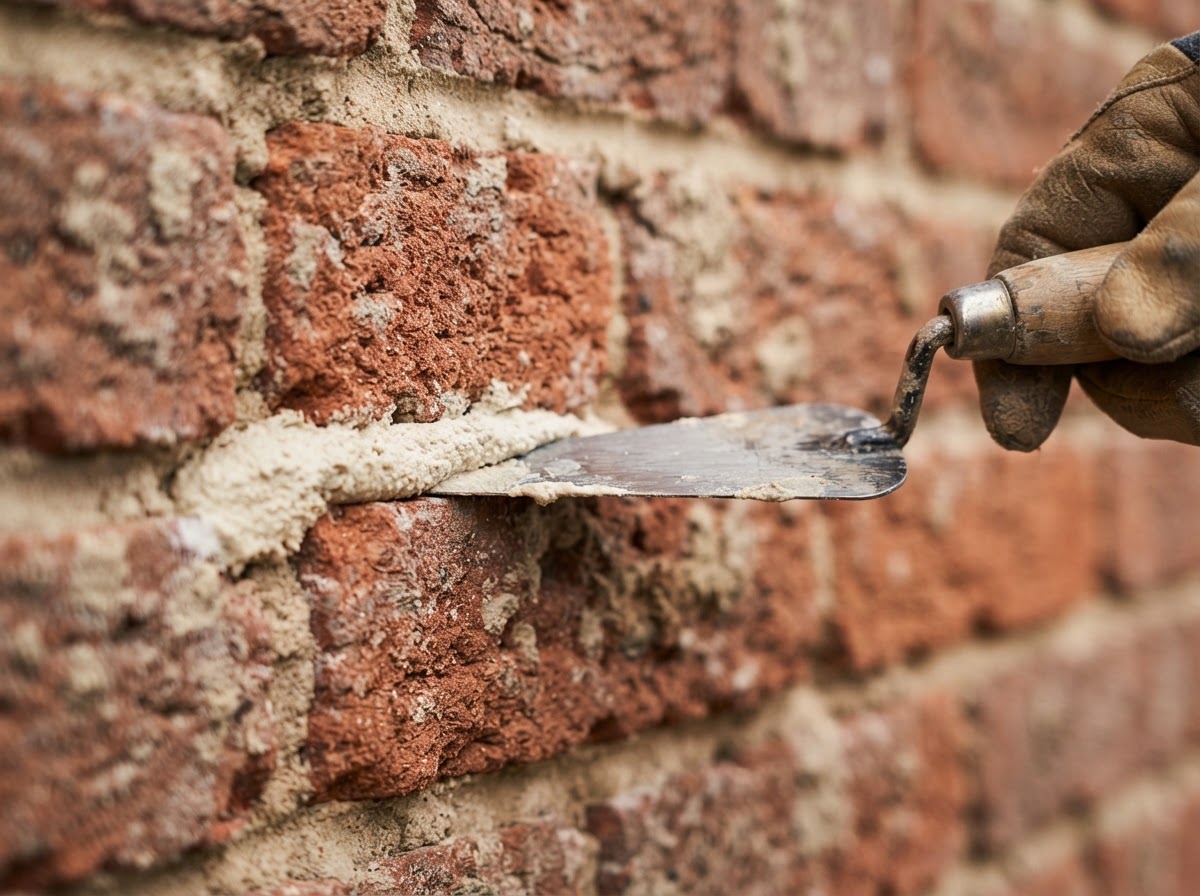
Brick repointing in Sydney that keeps period walls weather-tight
Failed mortar is often the first thing to go on an older brick wall. We rake it out carefully and repoint so the wall is sound, weather-tight and right for the age of the building. You deal directly with Troy.
Repointing is the essential repair for ageing brickwork. When the mortar between the bricks crumbles or falls away, water can get into the wall and the bricks themselves start to suffer. Heritage Master Builders repoints period and heritage homes across Greater Sydney, using materials that suit the building. You deal directly with Troy: the person who quotes the job is the person who does the work.
What is brick repointing?
Repointing means carefully removing decayed mortar from the joints and replacing it with fresh, properly mixed mortar, finished to a profile that suits the wall. Done well, it restores strength at the joint, keeps weather out, and lets the wall dry the way it was designed to.
It is not the same as tuckpointing. Repointing makes the joint sound. Tuckpointing is a decorative second step: a thin contrasting line applied on top to recreate the crisp finish on many Federation and Victorian facades. If your wall was never tuckpointed, a well-matched repoint is usually all you need. If it was, we can finish the job that way, or as part of a wider heritage brick restoration.
Signs your brickwork needs repointing
You do not need to wait until bricks start coming loose. Common signs include:
- Mortar that is crumbling, cracked or missing
- Joints you can scrape out easily with a key, or a powdery, sandy surface
- Mortar recessed by more than about 5mm from the face of the brick
- Gaps between bricks, especially on chimneys, parapets and exposed walls
- Damp patches, salt staining or peeling paint on the inside of the same wall
- Hard grey cement joints that sit proud of softer historic bricks
If you are seeing any of these, restore the joints before moisture damages the bricks or the framing behind them. A few photos and your suburb are enough for a free written quote.
How we repoint a wall
The aim is a joint that is sound, compatible with the bricks, and tidy — not a fast cement fill that looks neat for a season and then causes trouble. Troy checks the mortar, brick condition, moisture clues and access, then provides a free, no-obligation quote with no call-out fee. Failed mortar is raked out to a sound depth, carefully, so historic brick edges are not chipped. Joints are cleaned, then refilled with mortar mixed to suit the brickwork and the era, and tooled to the right profile. Damaged bricks or other obvious defects are dealt with rather than papered over, and the site is left tidy.
Lime mortar versus cement
This is the decision that matters most on an older Sydney house. Many period homes, especially solid-wall Victorian and Federation buildings, were built with lime mortar. Lime is softer and more breathable than modern cement, so moisture and salts can leave the wall through the joints instead of the bricks.
Heritage guidance in NSW is that lime joints should be repointed with lime. Hard cement is often stronger and less permeable than the bricks, so moisture is forced out through the masonry and can crack or spall the brick faces. We use lime mortar where the building calls for it. If later cement pointing is already there, Troy will tell you what he recommends.
Heritage homes and council approval
Period homes are our specialty, including Victorian, Federation and Californian bungalow brickwork. If your property is a heritage item, sits in a heritage conservation area (common in parts of the Inner West and Eastern Suburbs), or is on the State Heritage Register, check with your local council before work starts.
Like-for-like repointing with traditional materials is often treated as minor maintenance, but many NSW councils still want written confirmation first under clause 5.10 of the local planning scheme. State Heritage Register properties may also need approval under the Heritage Act 1977. Rules vary, and this is general information, not planning advice.
How long does repointing last?
When the mortar is compatible with the bricks and the joints are raked and filled properly, quality repointing lasts for decades. In Sydney’s climate, properly restored joints typically protect the brickwork and keep their appearance for 30 to 50+ years, depending on exposure, maintenance and the mortar used.
What repointing costs in Sydney
There is no honest single price for “repointing a house”. A small ground-floor repair and a two-storey terrace that needs scaffolding are different jobs. The quote is usually shaped by the area of wall, height and access, how much of the existing mortar has failed, whether lime mortar is required, and any brick or lintel repairs that should be done at the same time.
A written quote is free, with no obligation and no call-out fee. Send your suburb and a few photos through the contact form, or call Troy on 0424 259 620.
Repointing near you, across Greater Sydney
We are based in the Inner West and we come to you. Coverage includes Haberfield, Ashfield, Summer Hill, Leichhardt, Balmain, Paddington and the other suburbs on our service area page. The projects gallery includes lime-mortar repointing in Ashfield, and related facade work in Concord, Drummoyne, Haberfield and Rose Bay. Start with photos and a suburb — Troy will tell you whether a repoint is enough, or whether tuckpointing or a wider heritage brick restoration will serve the building better.