
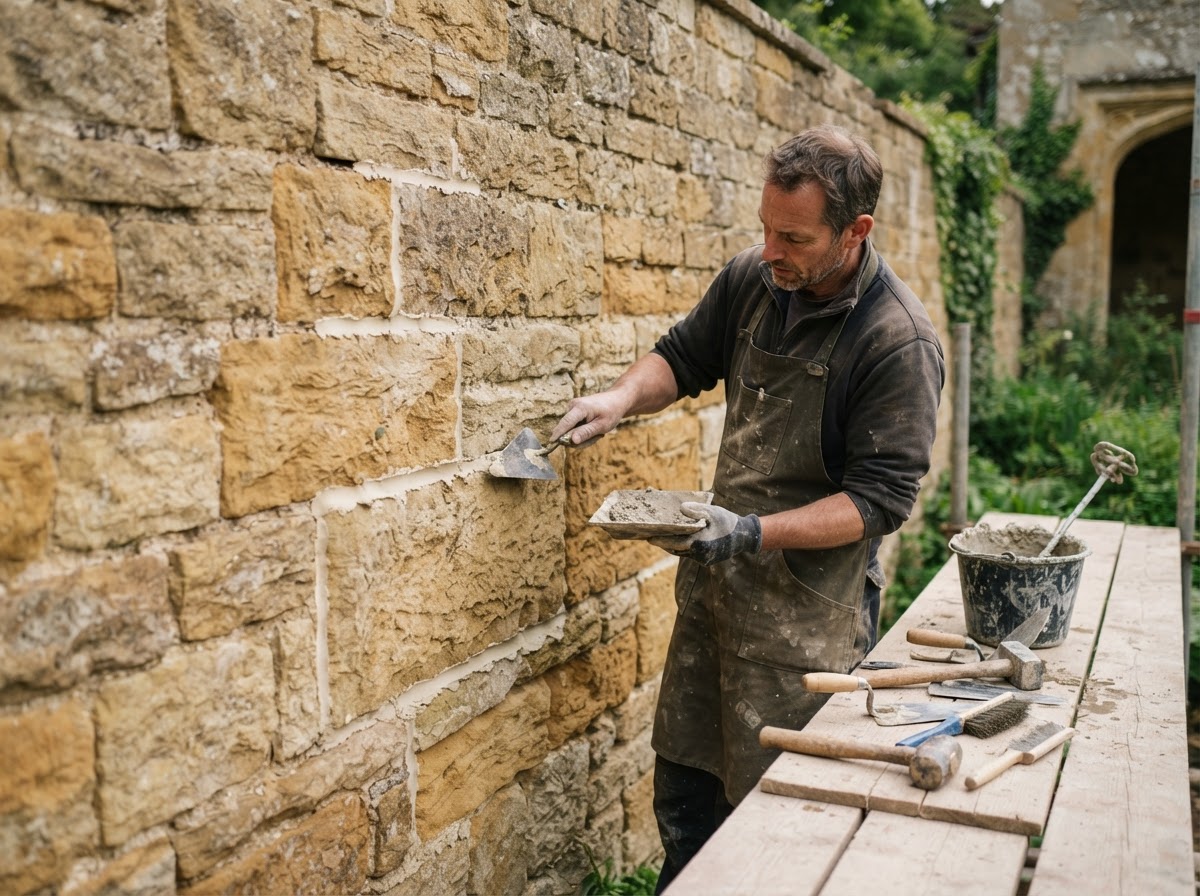
Lime mortar repointing for Sydney period homes
Many older Sydney buildings were built with lime mortar, which is softer and more breathable than modern cement. We work with lime where the building calls for it. You deal directly with Troy.
Lime mortar is not a decorative extra. On a solid-wall Victorian or Federation house, it is often the material the wall was built with. Heritage Master Builders uses lime mortar where the building needs it, so older walls can move and dry as they were designed to. You deal directly with Troy, the owner-operator.
If you want the longer explanation of why cement can harm a lime wall, read our guide to lime mortar vs cement. This page is about the work itself.
A real lime-mortar job in Ashfield
Our projects gallery includes traditional lime-mortar joint replacement on a weathered Inner West period cottage in Ashfield: crumbling joints raked out and freshly pointed with breathable mortar. We have also carried out high-level lime mortar work and structural repointing from scaffolding on a multi-storey heritage facade in Drummoyne.
Why lime, and when we use it
Lime is softer and more permeable than modern cement. Moisture and salts can leave the wall through the joints, and the mortar can take the wear instead of the bricks. Heritage guidance in NSW is that joints originally made with lime should be repointed with lime. Hard cement in a lime wall can trap moisture and push damage into the brick faces.
We use lime mortar on older, solid-wall construction where the building calls for it, and other heritage-compatible mixes when that is what the wall needs. If a later cement pointing has already been added, Troy will tell you what he can see and what he recommends. We do not force a modern mix onto a heritage wall just because it is quicker.
How lime-mortar repointing is done
Troy inspects the existing mortar, the bricks and the exposure of the wall, then provides a free, no-obligation quote. Failed joints are raked out carefully so historic brick edges are protected. The new lime mortar is matched as closely as practicable to the colour and character of the original work, compacted into the joints, and finished to a suitable profile. Tuckpointing can sit on a lime base where that was the original finish.
Lime needs time and the right conditions to harden. We plan the work so the new joints are not asked to dry out in harsh sun or wind. The site is left tidy.
Heritage homes and council approval
Period homes are our specialty. If the property is a heritage item, in a heritage conservation area, or on the State Heritage Register, check with your local council before work starts. Using traditional lime rather than a hard cement repair is often what councils want to see, but many still want written confirmation first. This is general information, not planning advice. See our council approval guide.
Where we work, and what it costs
We come to you across Greater Sydney. The suburb list is on our service area page.
Lime-mortar work is quoted on the wall, not from a single published rate. Area, access, how much later cement has to come out, and whether brick repairs or tuckpointing are included all affect the figure. Lime is a more careful process than a standard cement point, and the quote reflects that care rather than a shortcut.
A written quote is free, with no obligation and no call-out fee. Send your suburb and photos, or call Troy on 0424 259 620.